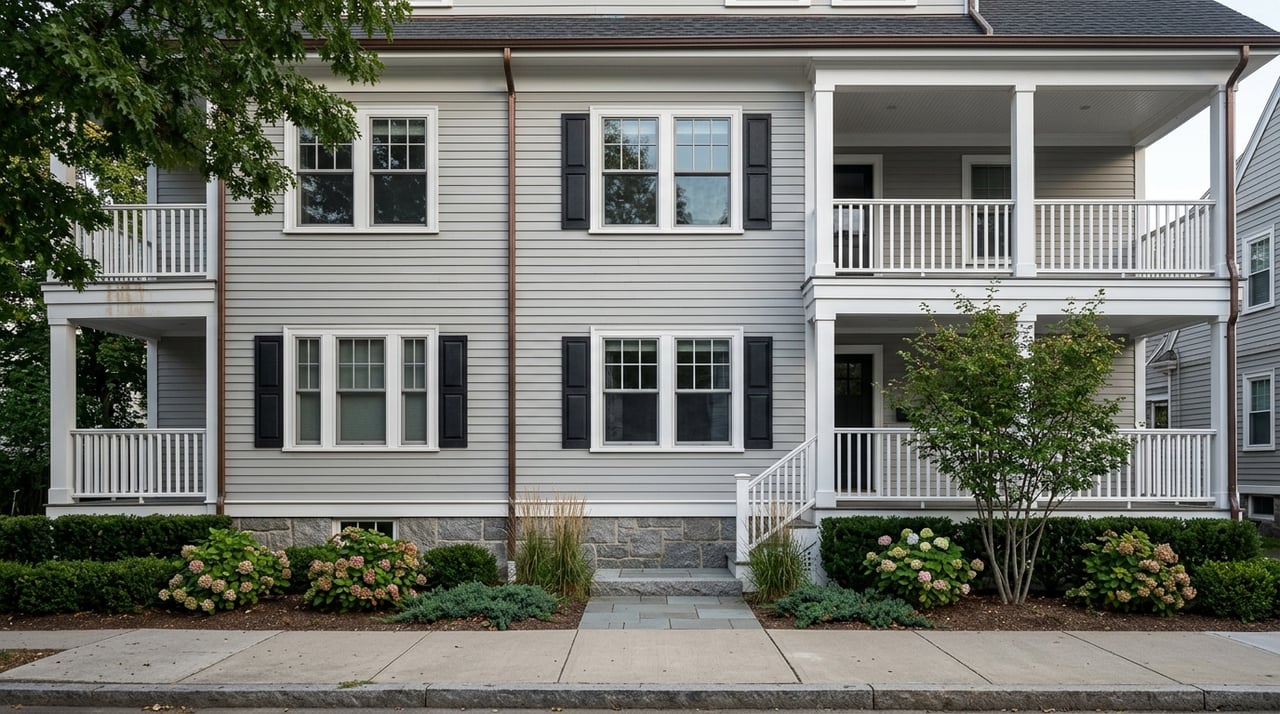
If you have been eyeing a two-family or three-family on Providence’s East Side, you already know the appeal. These properties sit in one of the city’s most established and closely watched submarkets, where strong rental demand and limited supply can make small multifamily ownership compelling. The catch is that East Side investing is rarely simple, and the numbers only work when you underwrite with discipline. Let’s dive in.
Why East Side small multifamily draws attention
The East Side remains a premium submarket by almost any measure. Current market data shows 89 homes for sale, 213 rentals, a median rent of $2,300, and a median of 14 days on market, while Redfin places the median sale price around $770,000 and describes the area as very competitive.
That premium matters because it changes the investment case. You are not usually buying for the highest immediate yield. More often, you are balancing strong tenant demand and long-run appreciation potential against a higher acquisition basis and a more compliance-heavy ownership experience.
What “East Side” includes
For this discussion, the East Side includes College Hill, Thayer Street, Fox Point, Wayland Square, Mount Hope, and Blackstone. These areas do not behave exactly the same, and that matters when you are evaluating a deal.
Rent levels vary enough from neighborhood to neighborhood to change underwriting in a meaningful way. Recent portal data places rents around $3,100 in College Hill, $2,850 in Fox Point, $2,600 in Wayland, $2,574 across the East Side overall, and $1,800 in Blackstone.
Demand is strong, but it is not uniform
One reason East Side rentals stay in demand is the area’s institutional anchors. Brown reports that about one-quarter of its undergraduates live off campus each fall, with many in College Hill and Fox Point, and RISD identifies College Hill and Fox Point as core East Side neighborhoods.
That gives nearby rentals a steady source of demand, especially in the neighborhoods closest to those institutions. Still, you should not assume every block will perform the same way. A property’s exact location, unit mix, condition, and lease profile can all move the numbers more than a broad neighborhood label.
East Side pricing sits above Providence overall
The East Side also trades at a clear premium to the broader Providence market. Zillow places Providence’s average home value around $429,449, which helps show how far East Side asking and sale prices can sit above citywide levels.
At the same time, Zillow ranks Providence as the No. 1 hottest rental market of 2026, citing 5% annual rent growth and a 5.1% vacancy forecast. That broader rental backdrop supports investor interest, but on the East Side you still need to test each property against real rents and realistic expenses.
Older housing stock changes the risk profile
Many East Side multifamily buildings come with architectural character and long-term appeal. They also often come with older systems, deferred maintenance, and stricter repair considerations than a newer suburban duplex.
Providence’s neighborhood planning materials describe College Hill as one of the city’s most historic residential areas and Fox Point as a dense residential neighborhood. In practical terms, that means you should expect older construction and budget carefully for roofs, masonry, windows, porches, and mechanical updates.
Lead compliance is a core underwriting item
On the East Side, lead compliance is not a side note. Rhode Island’s Department of Health says landlords of pre-1978 rentals generally need a valid lead certificate unless exempt, historic properties are not exempt, and the lead certificate must be renewed at least every two years.
That is especially important because many East Side properties are likely to predate 1978. The state also notes that the 2024 update removed owner-occupied property exemptions for rental units, and landlords must follow lead-safe work practices.
If you skip this line item in your underwriting, your projections can drift quickly. Failure to provide a valid lead certificate can trigger at least a $125-per-unit-per-month civil fine.
Historic district rules can affect renovation plans
If a property sits in a local historic district, exterior work may be more constrained than you expect. Providence Historic District Commission standards emphasize minimal visual impact and require replacement windows, doors, and other exterior elements to match original materials, design, dimensions, and configuration.
That does not mean improvements are impossible. It does mean your timeline, contractor scope, and capital budget may need more room than they would on a comparable non-historic asset.
Financing can work, especially for live-in buyers
For many buyers, the most attractive path into East Side multifamily is owner-occupancy. FHA guidance covers owner-occupied 2-to-4-unit principal residences, and Fannie Mae and Freddie Mac both allow rental income from qualifying units or other properties under documented rules.
Fannie Mae specifically allows rental income from a 2-to-4-unit primary residence when you occupy one unit. Lenders may document that income through leases, rent verification, bank records, or other supporting documents, which means actual lease quality and appraised rent matter as much as headline asking rents online.
Providence taxes can materially change cash flow
Property taxes are one of the biggest reasons owner-occupancy deserves a close look. For FY2026, Providence set the owner-occupied 2-to-5-unit tax rate at $7.55 per $1,000 of assessed value, while the non-owner-occupied 2-to-5-unit rate is $14.00 per $1,000.
That spread can materially affect monthly cash flow. If you are comparing a live-in strategy with a fully non-owner-occupied hold, the tax line alone may change which structure makes sense.
Underwrite from leases, not listing headlines
Because East Side rents vary block by block and portal data can differ by source, clean underwriting matters. A property with attractive asking rents online may still underperform if current leases are below market, turnover is high, or condition limits achievable rent.
A more disciplined approach is to work from actual leases, realistic rent comps, a vacancy allowance, and a conservative capital reserve. On the East Side, the spread between a good deal and a disappointing one often comes down to details that do not show up in the first listing photo.
Compliance is part of the business plan
Rhode Island now requires landlords to register residential rental properties in the statewide Rental Registry. New owners or landlords must register within 30 days of acquisition or leasing, annual re-registration is due by October 1, and noncompliance can trigger at least a $50-per-unit-per-month civil fine.
There is another important consequence. Landlords cannot file for nonpayment eviction unless they are registered and compliant.
That makes post-closing setup more than an administrative task. It is a core operating requirement.
Security deposit rules are strict
Rhode Island’s Residential Landlord and Tenant Act caps security deposits at one month’s periodic rent. It also requires an itemized return within 20 days after the later of tenancy termination, delivery of possession, or the tenant’s forwarding address.
For owners, that means good records matter. Clear move-in documentation, consistent accounting, and organized turnover procedures can help protect your position if questions arise later.
Zoning and overlay review should happen early
Even after offer acceptance, zoning review still matters. Providence approved a new Comprehensive Plan in late 2024, and current zoning should be checked against the updated ordinance and overlay maps.
That is especially relevant in Fox Point, where some parcels fall under the East Side I-195 overlay, and in areas where local historic district rules may add another layer of review. Before you finalize pricing or renovation assumptions, verify exactly what applies to the property you are buying.
When East Side multifamily makes sense
East Side small multifamily can make sense if you value durable demand, prime neighborhood positioning, and long-term asset quality. It can be particularly attractive if you plan to live in one unit, want to offset your housing cost, or are comfortable taking a measured, long-view approach to returns.
It is usually less compelling for buyers chasing the highest immediate yield. The tradeoff here is straightforward: premium rents and strong demand on one side, with premium pricing, preservation constraints, and heavier compliance on the other.
What to focus on before you buy
If you are evaluating a two-family, three-family, or four-family on the East Side, focus on the items that most often change the real basis:
- Actual in-place rents and lease terms
- Lead certificate status and likely mitigation needs
- Roof, masonry, windows, porches, and mechanical condition
- Historic district status and exterior review requirements
- Owner-occupied versus non-owner-occupied tax treatment
- Zoning, overlays, and permitted use
- A realistic vacancy and capex reserve
Those are the details that can sharpen your negotiation strategy and keep your underwriting grounded in reality.
If you want a clear-eyed view of a specific East Side multifamily opportunity, Michael Sweeney can help you evaluate pricing, neighborhood context, condition risk, and transaction strategy with the level of care these properties deserve.
FAQs
What counts as the East Side of Providence for small multifamily investing?
- For this article, the East Side includes College Hill, Thayer Street, Fox Point, Wayland Square, Mount Hope, and Blackstone.
Are East Side Providence multifamily properties good for cash flow?
- They can produce strong rent, but many buyers are balancing premium pricing, taxes, capital needs, and compliance costs rather than buying for the highest immediate yield.
Do Providence East Side rental properties need lead certificates?
- In Rhode Island, landlords of pre-1978 rentals generally need a valid lead certificate unless exempt, and historic properties are not exempt.
How do Providence property taxes affect East Side multifamily investing?
- For FY2026, Providence taxes owner-occupied 2-to-5-unit properties at $7.55 per $1,000 of assessed value and non-owner-occupied 2-to-5-unit properties at $14.00 per $1,000.
Can you use owner-occupied financing for a 2-to-4-unit property in Providence?
- Yes, agency financing options can apply to owner-occupied 2-to-4-unit properties, and documented rental income from other units may help with qualification.
What compliance issues matter most for East Side Providence landlords?
- Key items include Rhode Island Rental Registry compliance, lead certificate compliance for applicable properties, and following state rules for security deposits and move-out accounting.